
How to Greet a Working Therapy Dog (and When Not To)
A therapy dog in a hospital corridor draws people like a magnet, and that is exactly the point of the work. But good intentions go wrong quickly when strangers rush in, squeal, loom or reach for the dog's face. A few simple habits keep encounters safe and pleasant for the dog, the handler and the people the team is actually there to serve.
The core idea is consent, in both directions. The handler must agree to the interaction, and the dog must be a willing participant rather than a tolerant hostage. Everything else is detail built on those two permissions.
Ask First, Always
The single most important rule costs two seconds: ask the handler before touching. A team may be between visits with the dog resting, working with a specific patient who has priority, or finishing a shift with a tired animal. Handlers are trained to say no kindly, and a polite refusal is information, not rudeness. When the answer is yes, the handler will usually position the dog and tell you how it likes to be greeted.
Children should learn the same habit early. Programs in schools often teach a simple script: stop, ask, offer a hand, pat the chest or shoulder rather than the head. That script protects the child, the dog and the lesson, because a dog that enjoys its work with children is a dog whose boundaries were respected by hundreds of them.
Body Language That Helps
Dogs read posture faster than words. Approaching from the side rather than head-on, crouching to reduce height, keeping movements smooth and letting the dog close the final distance all signal friendliness in the language the dog actually speaks. Staring directly into the eyes, leaning over the dog's head and grabbing for ears or tail read as pressure, even from the kindest stranger.
| Do | Avoid | Why |
|---|---|---|
| Ask the handler first | Touching without permission | The dog may be resting, working or off duty |
| Approach from the side, crouch down | Looming over the dog's head | Overhead pressure reads as threatening to many dogs |
| Pat the chest, shoulder or back | Grabbing ears, tail or face | Those areas are sensitive and easy to startle |
| Let the dog come to you | Chasing or cornering for a photo | A cornered dog cannot choose to leave |
| Keep visits brief and calm | Squealing, hugging tightly, crowding in groups | Arousal spikes make accidents more likely |
When Not to Interact at All
Some moments call for admiration from a distance. Learning to spot them is a genuine public service:
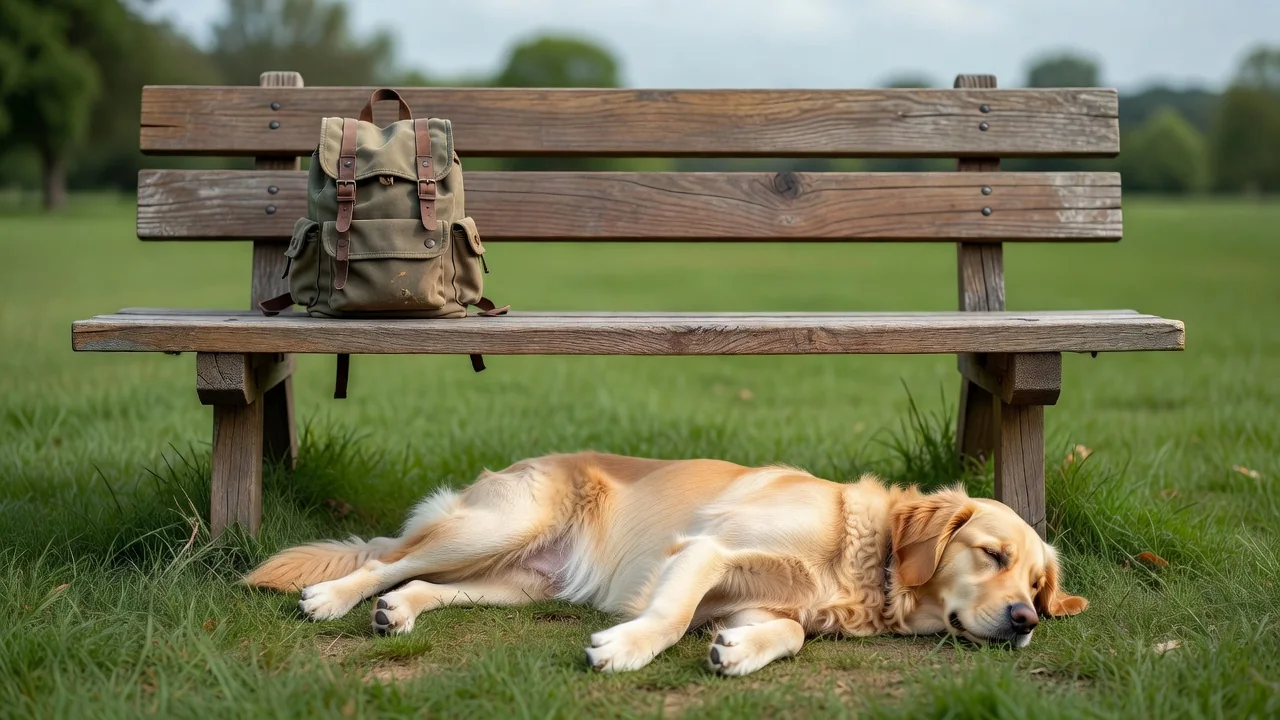
- The dog is lying down with its handler sitting quietly nearby, the universal sign of a rest break.
- The handler is in conversation with staff or a patient, and the dog is attending to that person.
- The dog shows stress signals such as lip licking, yawning, a tucked tail or turning its head away from attention.
- The setting is inappropriate, such as a canteen queue or a crowded lift where the dog has no room to move away.
- The dog is eating, drinking or being groomed before entering a ward.
Teaching the Next Generation of Visitors
Every public encounter is also a small lesson. Handlers who take thirty seconds to show a child how to offer a hand, or to explain why the dog is resting now but will visit the common room later, multiply the effect of the visit itself. Facilities report that wards which host regular therapy teams quickly develop their own etiquette culture, with patients gently correcting newcomers.
That culture is the quiet long-term product of therapy dog programs. The dog comforts for an hour, but the habits it teaches, asking before touching, reading another being's comfort, accepting a graceful no, travel with people long after the visit ends. A well-greeted therapy dog is not just safer. It is a better teacher.