
Preparing Your Pet for a Therapy Animal Evaluation
The therapy animal evaluation is a strange exam: an hour or so of exercises that decide whether your pet's next few years include hospital corridors and school libraries. Teams that prepare thoughtfully pass at high rates; teams that cram obedience the week before usually learn what the evaluation is actually measuring. It is less a test of tricks than a portrait of how your animal handles the world.
Preparation ideally starts months out, but even teams a few weeks from their date can sharpen the right things. The key is knowing what evaluators score, and what they simply watch.
What the Evaluation Actually Contains
Formats differ between organizations, but the core exercises are remarkably stable. Expect a greeting with a friendly stranger, handling of paws, ears and tail, a clumsy or exuberant petting simulation, a walk through a crowd or past a neutral dog, a leave-it with food on the floor, a reaction test with a sudden noise or a startling object, and a supervised separation or out-of-sight moment. Throughout, the evaluator watches the animal's body language as closely as its obedience.
The team is scored together. Evaluators note whether the handler notices stress, advocates for the animal and stays calm when something goes sideways. A handler who panics at a minor mistake teaches the animal that the room is dangerous; a handler who breathes through it teaches the opposite.
The Three-Month Preparation Arc
With time available, preparation falls into three natural phases, each with its own texture.
| Phase | Focus | What good looks like |
|---|---|---|
| Months 1 to 2: foundations | Reliable sit, down, stay, loose-lead walking, leave-it | Cues work in busy places without treats in hand |
| Months 2 to 3: exposure | Wheelchairs, trolleys, crowds, slick floors, uniforms | Animal investigates or ignores novelty without tension |
| Final weeks: simulation | Mock evaluations, clumsy petting, handling drills | Full routine runs calmly with an unfamiliar "evaluator" |
The Details That Decide Borderline Cases
Evaluators consistently flag the same small things, and all of them are trainable:
- Greetings that start politely and escalate into jumping or mouthing as excitement builds.
- A leave-it that works at home but fails with real food at floor level in a strange room.
- Recovery time after a startle: a few seconds of alertness is fine; minutes of scanning is not.
- Handling tolerance for the unglamorous parts: paws, tail, inside ears, a stranger's firm hug.
- The animal's behaviour between exercises, which reveals more than any single task.
Health, Grooming and Logistics
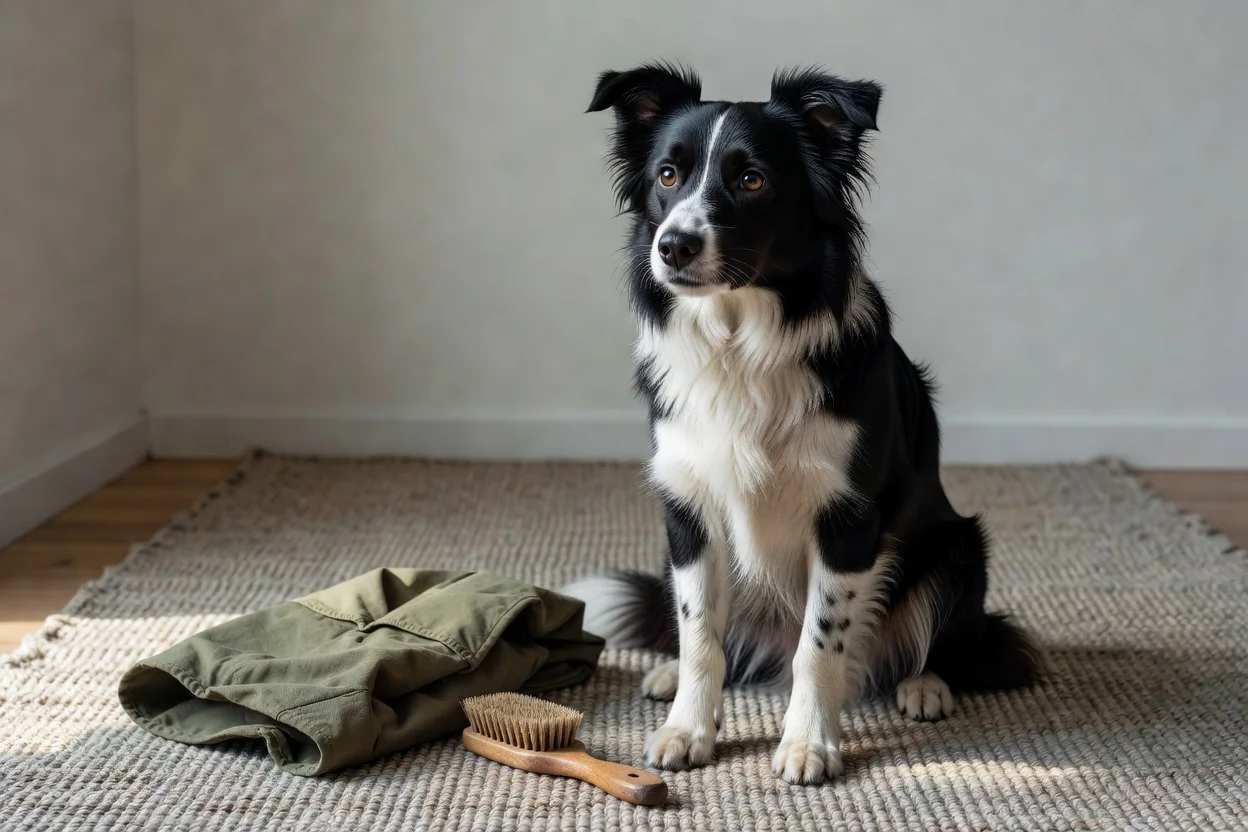
Evaluation day has an administrative side. Vaccination records and a health check are normally required in advance; some organizations want a veterinarian's statement of fitness. The animal should arrive clean, brushed and with trimmed nails, since grooming is assessed as part of welfare and hygiene. Feed lightly beforehand, exercise earlier in the day and arrive early enough for the animal to decompress in the car park before entering a new building full of new smells.
If You Do Not Pass
A failed evaluation is information, not verdict. Evaluators will usually say which exercises exposed the gap, and the honest responses fall into three groups: more training will fix this, more maturity will fix this, or this animal is telling you the work does not suit it. The first two produce successful re-evaluations all the time. The third produces a happy pet whose owner learned something true, which is not a failure at all.
The teams that walk out smiling share one habit: they prepared the relationship, not just the routine. An evaluation room is just another strange place, and an animal that trusts its handler in strange places has already passed the part that cannot be drilled.