
Ground Work: Equine Therapy Without Riding
Some of the most powerful equine therapy sessions never involve a saddle. Ground work covers everything done with a horse while standing beside it: leading, grooming, obstacle courses, liberty exercises, or simply sharing space in a paddock while a conversation unfolds. For many clients, especially those frightened of riding or physically unable to mount, this is where the real work happens.
Ground-based sessions are the home of equine-assisted psychotherapy and equine-assisted learning, but they also serve clients in physical rehabilitation programs who need the horse's presence without the risks of mounted work. The horse is the same honest mirror; only the format changes.
What Ground Sessions Actually Involve
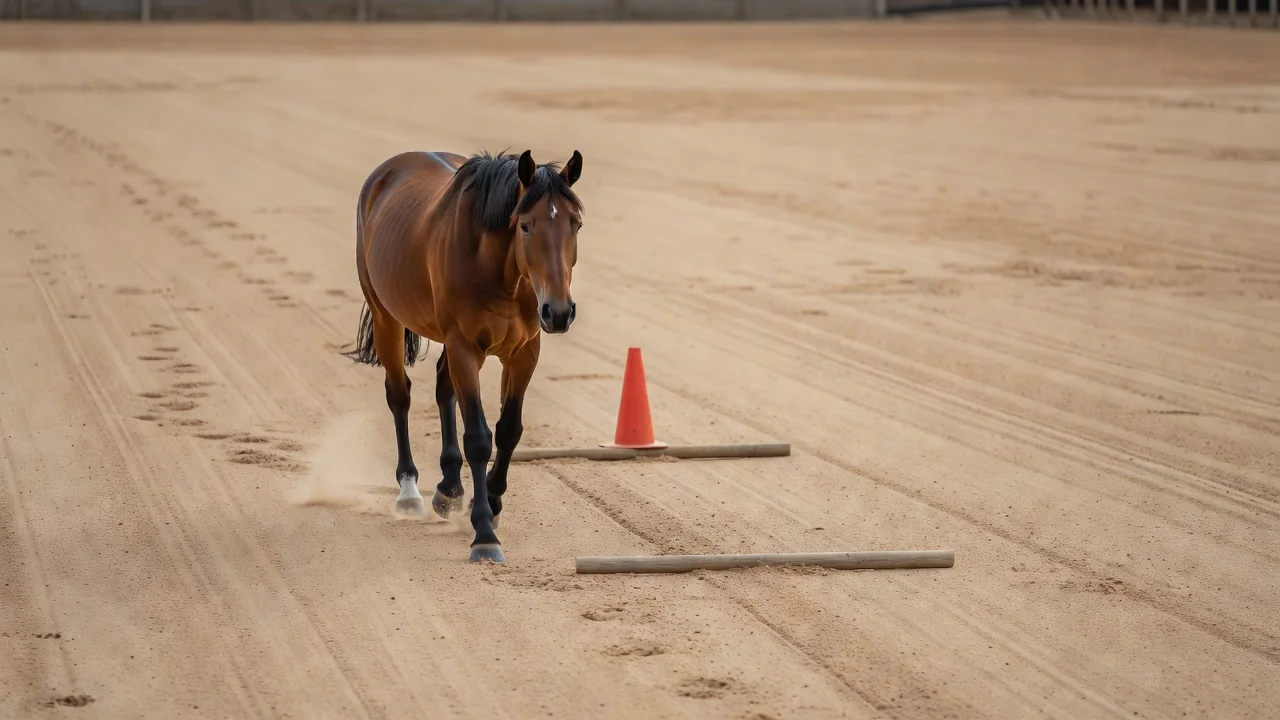
A typical session gives the client a concrete task with the horse, chosen to match therapeutic goals. Leading the horse between cones rehearses clear intention and boundary setting. Grooming builds routine, gentle touch and reading of the animal's comfort. Asking the horse to step over a pole or walk a circle without a rope attached demands patience, timing and calm persistence. Each task is simple to describe and surprisingly revealing to attempt.
Because there is no riding skill to learn, attention stays free for the emotional content. Facilitators watch how the client approaches the task, how they respond to the horse's refusals and successes, and how frustration or fear moves through their body. The debrief afterwards, often short and concrete, connects the arena experience to life outside it.
Who Ground Work Suits Best
Ground-based formats open equine therapy to people for whom riding is unsuitable or unappealing:
- Clients whose medical conditions rule out mounted work, such as certain spinal instabilities or uncontrolled seizures.
- People with a deep fear of riding who still want the horse's company and feedback.
- Teenagers and adults in psychotherapy who engage more honestly through doing than through talking.
- Groups working on communication and teamwork, since several people can share one task with one horse.
- Older adults and people with limited mobility, who can participate from a stable yard or a chair at the arena edge.
| Ground activity | What it rehearses | Typical insight |
|---|---|---|
| Leading through cones | Clear direction, steady pace | "The horse followed when I finally decided where we were going." |
| Grooming | Attunement, gentle routine | "I noticed I was rushing; she leaned in when I slowed down." |
| Obstacle at liberty | Influence without force | "Asking worked better than pushing." |
| Boundary exercises | Personal space, saying no | "I can move a horse's shoulder; maybe I can hold a line with people." |
| Quiet observation | Presence, tolerance of silence | "Standing still together was the first calm moment of my week." |
Safety on the Ground Is Its Own Discipline
It is tempting to treat ground work as automatically safe because nobody is mounted. In reality, most equine injuries happen on the ground, which is why good programs teach positioning from the first minute: stay near the shoulder rather than directly in front or behind, keep the rope unwrapped from hands, move calmly and tell the horse where you are. Sessions use horses specifically selected for steadiness with inexperienced handlers, and facilitators stay close enough to step in early.
Footwear and clothing matter more than newcomers expect. Sturdy closed boots, no dangling scarves, gloves for leading and, where the program requires it, a helmet even on the ground are standard precautions, not signs of an unsafe stable. A program that is casual about these details is telling you something important about the rest of its standards.
The Quiet Advantages of Staying on Foot
Ground work has one more virtue that is easy to underestimate: equality of footing. Standing beside the horse, the client is not a passenger or a pupil but a partner in a shared task, face to face with an animal that outweighs them ten to one and chooses, visibly, to cooperate. Many people describe their first successful ground session as the moment they stopped feeling like a patient.
That shift in self-image is often the point. The skills rehearsed at the end of a lead rope, clarity, patience, calm authority, respect for another being's boundaries, are precisely the skills most therapy is trying to build. The horse just makes the lesson impossible to ignore and, on the good days, impossible to forget.