
Live Dealer Games: How They Work from Studio to Screen
Somewhere in a converted warehouse, a dealer finishes shuffling eight decks of cards while three cameras watch from different angles. A sensor in the table reads each card as it leaves the shoe, and within half a second a player on another continent sees the hand appear on screen with a digital overlay of their betting options. This is a live dealer game, and the machinery behind it is more interesting than most of the games it serves.
Live casino exists to solve a trust problem. Some players never warmed to software-dealt cards, however certified the random number generator. A human dealer, physical cards and a real roulette wheel answer that scepticism with something a person can watch. The price of that realism is an elaborate stack of studio technology that has to work flawlessly, thousands of rounds a day.
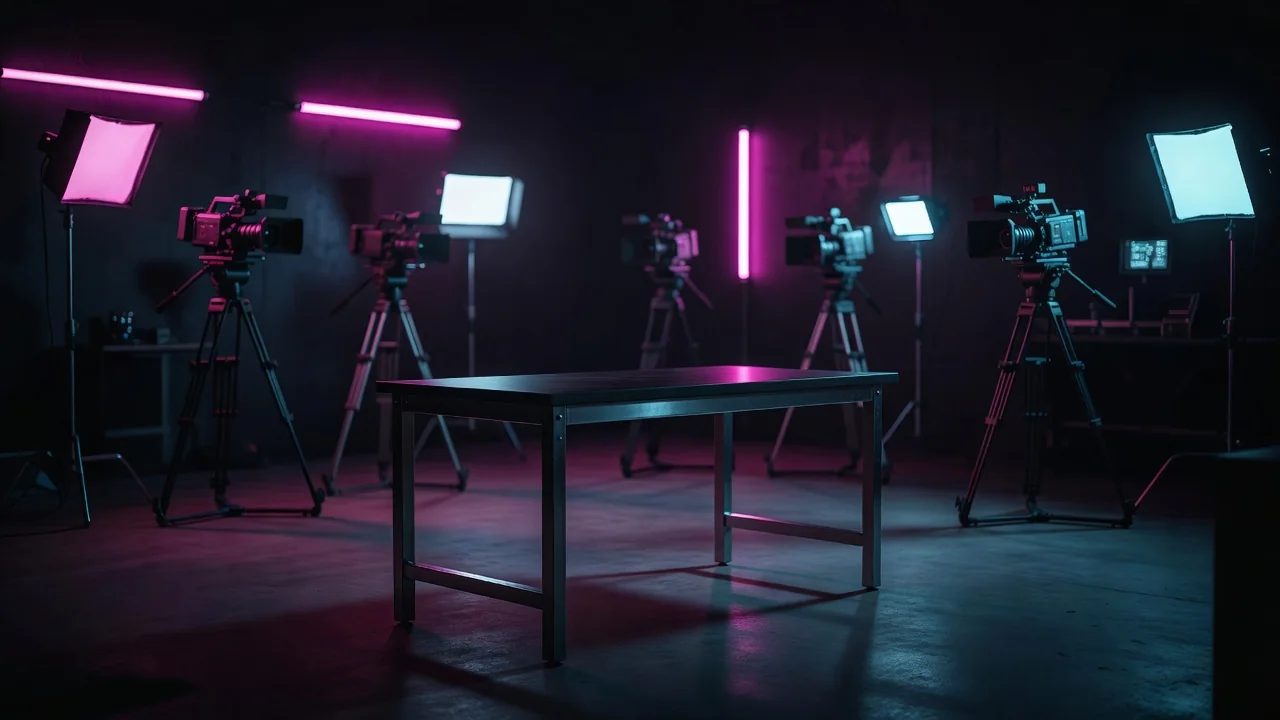
The studio: a broadcast facility that deals cards
A live casino studio looks like a television set because it is one. Tables are spaced for camera angles rather than floor traffic, lighting is tuned for lenses rather than players, and the background is dressed to read well on a phone screen. Dealers work in shifts like broadcast presenters, trained not only in game procedure but in speaking to a lens, reading player messages from a monitor and keeping the table's rhythm steady for an audience they never see.
Behind the set sits the control room, where technicians monitor every feed, every table and every data stream. A typical large studio runs dozens of tables simultaneously, with redundancy at every layer: backup power, duplicate internet lines and spare cameras, because a frozen feed mid-hand is the one failure the format cannot excuse.
OCR: the camera that reads the cards
The technology that makes live casino possible is optical character recognition, the same family of software that digitises printed books. Cameras focused on the table capture every card face the instant it is dealt, and OCR software converts the image into data: suit, rank, position. That data feeds the game server, which settles bets, updates balances and draws the on-screen graphics the player sees. Roulette wheels use a mix of sensors and computer vision to the same end, logging the winning number the moment the ball settles.
This is the crucial detail for players to understand: the physical game and the digital wallet are synchronised by machine, not by a human typing results. The dealer deals; the OCR reads; the server pays. The chain is fast enough that results settle in seconds, and the cards or wheel remain the source of truth, which is the entire point of the format.

What the player sees and how the bet travels
On the player's side, the experience is a video stream with a betting interface laid over it. Chips are placed by tapping the layout, the bet travels to the game server, and the dealer sees confirmed bets on a monitor at the table. When the round resolves, the OCR data settles every bet automatically and the stream shows the outcome a moment later. The whole loop, from tap to settled bet, typically completes well within the natural pace of the physical game.
- The dealer handles real cards or a real wheel; nothing is simulated.
- OCR and sensors convert physical results into data within fractions of a second.
- The game server settles all bets automatically from that data.
- The video stream is delayed by a second or two, which is why bets close before the deal.
- Results at live tables match the game's mathematics: European roulette returns 97.3 percent, American roulette 94.7 percent, over the long run.
The pipeline at a glance
| Stage | What happens | What the player notices |
|---|---|---|
| Studio | Dealer runs the physical game under cameras | The live video feed |
| Capture | OCR and sensors read cards and wheel results | Nothing; it is invisible |
| Game server | Data settles bets and updates balances | Winnings appear in seconds |
| Interface | Betting overlay syncs with the stream | Chips, limits and history panels |
| Control room | Staff monitor feeds, fairness and uptime | A table that simply keeps working |
Why the format keeps growing
Live casino grew because it combined the two things online gambling struggled to offer at once: the transparency of watching physical equipment and the convenience of playing from a sofa. The same infrastructure later made game shows and hybrid formats possible, and improvements in streaming turned early, grainy webcam tables into the polished studios of today. The dealer, the cards and the wheel remain stubbornly analogue. Everything around them is software, and the seam between the two is where the whole industry lives.
Play responsibly
The human presence at a live table makes the game feel social and unhurried, which is exactly why time and money can slip by unnoticed. Live casino is for players aged 18 and over, using entertainment money only, with deposit and session limits set before joining a table. The dealer will still be there tomorrow; a session that ends on time is a session done right.
If play starts to feel compulsory, if losses trigger immediate redeposits or if gambling is crowding out sleep, work or relationships, those are signals to act on. Confidential support is available free through national gambling helplines and peer communities such as Gamblers Anonymous, and the first conversation is always without obligation.